Canonical working evidence file
Nolan Wells Investigation Master Notes
What the evidence most reasonably supports
A defensible reconstruction
- Nolan leaves home and stays with friends before the Horn Island trip.
- The GPS-tracked boat carrying Nolan leaves the mainland.
- Tracestin Shepherd is already at Horn Island. Nolan calls him for help finding where to anchor.
- Nolan’s boat arrives. Tracestin says he then spends much of the day with Nolan and the broader friend group.
- Nolan swims, socializes, and is photographed or possibly recorded among the boats.
- Warren later says this is about the last time he personally saw Nolan. Nolan is reportedly interacting with Katie.
- Tracestin gets into an altercation with another man. He says his uncle then forces him back onto the family boat.
- Tracestin says Nolan was in the water nearby but was not visible in the circulated video.
- Jayvon Williams later says he was socializing with Nolan, left for approximately 15–20 minutes to check on a friend involved in an altercation, and returned to find Nolan’s boat and the people Nolan had been with gone. Taken literally, the approximate range plus elapsed time implies a return around 3:55–4:20 PM. If “Nolan’s boat” meant MI4088BU, that rough implication conflicts with the official 4:31 sustained-movement anchor; the discrepancy could reflect imprecise recollection or a different vessel reference. The account does not identify the exact return minute or establish Nolan’s location.
- The viral video is recorded from a nearby boat. Tracestin later confirms he is the person yelling. Original file metadata has not been obtained.
- Tracestin says he leaves with his family. Accounts during this period say friends urged Nolan to leave but that he chose to remain.
- The report and later interviews preserve a claim that Nolan declined to board. The public record does not identify every original listener or preserve Nolan’s exact words. A separate secondhand Katie-related account says she heard friends call Nolan to board, said goodbye, assumed he would leave with them, and did not witness a refusal.
- MDMR’s published sustained northbound segment begins. Public accounts say Nolan is not aboard and that his phone is; GPS itself establishes neither claim.
- A newly defined 17-minute interval separates the official movement start from the displayed Sea Tow call time. The tow-line attachment, emergency-discovery sequence, and vessel configuration inside this interval remain unresolved.
- A Sea Tow distress call reports bilge-pump failure, a boat taking on water, approximately seven people aboard, and the current coordinate 30°14.684′ N, 88°46.790′ W. The caller says the vessel is not aground. The time comes from a reproduced phone-log exhibit supplied by counsel; original Sea Tow metadata remains preferable.
- The caller says private assistance has been arranged, and Sea Tow is canceled. This cancellation occurs after the official 4:31 PM movement begins.
- The official GPS summary records approximately 2.75 miles of slow movement. The later distress call, its private-help statement, and public tow accounts make assistance the strongest current explanation; GPS alone does not prove the tow configuration.
- The tracked vessel resumes normal operation at approximately 30–35 knots.
- MI4088BU reaches El Camino Real Road.
- Official GPS records MI4088BU leaving the dock east into Fort Bayou at 5:52 PM and returning at 6:06 PM. This dock→Fort Bayou→dock order appears reversed in a later interview account that places a Fort Bayou drain-plug stop before the dock.
- Displayed phone records show a five-minute call to Nolan’s mother at 11:07 PM, a 21-minute outgoing Coast Guard call at 11:13 PM, texts beginning at 11:15 PM, and another family call at 11:35 PM. The records establish times and durations, not the calls’ contents.
- MDMR opens missing-person CAD call 2607-0196 and records Christine’s report, the approximately 3:00 PM last-seen account, Nolan’s phone in a friend’s truck, and prior Coast Guard notification.
- Counsel’s exhibit set displays an incoming Coast Guard call at 12:25 AM and another call to Nolan’s mother at 1:00 AM. The displayed records establish times, not the calls’ contents.
- MDMR records JCSO’s working explanation that Nolan stayed with an unknown woman and returned on another vessel, and records no perceived water-related exigency. This establishes the early working assumption, not the truth of the alternate-ride claim.
- Counsel’s exhibit set displays a 911 record. The exhibit does not include the complete call audio or prove what information was exchanged.
- Family and private searchers reach Horn Island before or alongside the main MDMR response. MDMR launches the Admiral Dewey around 8:00 AM.
- Drone help is requested; early launches fail; two later flights cover limited recorded grids. The second ends after a heat-swollen battery separates.
- The Coast Guard receives JCSO’s assistance request and JCSO publishes a missing-person notice.
- MDMR views MI4088BU’s Garmin and records the saved anchor coordinate; the narrative contact and exact 4:50 GPS power-on are separate actions.
- The command post and sonar response continue. A 9:52 PM email requests Coast Guard SAR modeling; its 6:00 PM incident time is a model input, not a verified event time.
- United Cajun Navy aircraft and boat assets redeploy before dawn.
- Authorities are reportedly notified that an NPS ranger found Nolan near Horn Island’s northwest tip. The notification time may differ from the exact discovery minute.
- MDMR creates later assistance and deceased-person CAD calls. Those entries do not replace the approximately 8:45 AM notification sequence.
- Nolan is transferred to the coroner, and the family publicly confirms his death. Formal dental identification follows on July 7, 2026.
- A publicly posted message screenshot records an alleged witness saying she intended to provide police with an account and limited footage. The wording is future tense, so the image establishes reporting intent—not that police had received the information by 1:08 AM. The displayed year is inferred from the 2026 case context, and the participants, delivery, and underlying claims remain unauthenticated.
Firsthand observation · scope limited
Horn Island after the 4:31 PM departure
Phillip Elmore says that when he reached Horn Island the next morning, he saw a family that had stayed overnight and two boats still docked. The account matters because it challenges a broad “everyone had left” or “the island was deserted” framing.
What the account supports
- Some people reportedly remained overnight.
- Two boats were reportedly still docked the next morning.
- Potential witnesses or records may exist beyond the main friend group.
What it does not establish
- That Nolan was alive after MI4088BU moved at 4:31 PM.
- That campers or boat occupants were near Nolan or could see him.
- That anyone observed an incident or heard a call for help.
Needed: identities and direct statements from the overnight campers and remaining boat occupants, vessel locations, photographs, and precise lines of sight. Source: WLOX’s July 10 family press-conference report.
Detailed chronology · July 4, 2026
Late-night realization and reporting
- A reproduced phone-log exhibit shows a five-minute call to Nolan’s mother. Christine Wonsley says Warren called her; Life360 placed Nolan’s phone on the mainland, which did not establish Nolan’s location.
- The same exhibit shows a 21-minute outgoing Coast Guard call. The displayed time and duration do not establish the caller’s complete words or the agency’s response.
- The exhibit set shows text messaging beginning. Native message exports and the complete conversation remain unavailable.
- A second call to Nolan’s mother appears in the exhibit set.
- A preserved source-post audio excerpt dispatches a missing-person report from the east side. The excerpt does not name Nolan and has no native CAD timestamp, so it is consistent context rather than a substitute for the MDMR call record.
- MDMR CAD call 2607-0196 is created as a missing-person call. Its disposition is “clear without a report,” which describes the CAD handling rather than resolution of Nolan’s whereabouts.
- Lt. Patrick Carron records that Christine reported Nolan missing. The entry relays an approximately 3:00 PM last-seen time, Nolan’s phone in a friend’s truck, friends having returned, and prior Coast Guard notification. Carron directs the family to JCSO.
- Family accounts describe efforts to find Nolan and recover his phone and keys. No public evidence establishes deletion or alteration of phone data; that question requires forensic extraction and chain-of-custody records.
- A combined-feed unit says it is “currently dealing with a potential missing person.” Nolan is not named, so the recording establishes only potential-missing-person activity on the feed at this time; its case connection remains unconfirmed.
- A combined-feed transmission directs a unit to meet the reporting party and says she wants to report her 18-year-old son, Nolan Wells, missing and last seen at about 3:00 PM on Horn Island. The clip does not establish the first notification time or replace an agency CAD record.
- The exhibit set shows an incoming Coast Guard call. It does not preserve the complete audio or intake record.
- The exhibit set shows another call to Nolan’s mother.
- The exhibit set shows a 911 record. The complete call and agency disposition are not included.
Unresolved call sequence: the displayed records materially improve the timestamps, but they do not supply the initial call audio, all agency handoffs, or a complete minute-by-minute response log. Descriptions of call contents in counsel’s letter remain advocacy unless independently supported.
Sources: WLOX’s public timeline, WLOX’s family press-conference report, the MDMR report, pages 3 and 13, the preserved source-post dispatch excerpt, the 12:24 AM original-feed dispatch, and the preserved August 21 counsel letter and reproduced exhibits.
Detailed chronology · July 5, 2026
From the overnight assessment to sonar planning
- Carron records speaking with Ocean Springs Police and JCSO Lt. Odom. JCSO’s working explanation was that Nolan stayed with an unknown woman and returned on another vessel; no water-related exigency was identified. The entry proves the assessment existed, not that an alternate ride occurred.
- The obtained MDMR narrative records no further action by that shift. This is an MDMR-record gap and must not be expanded into a claim that every family member, volunteer, or other agency did nothing.
- Combined-feed radio traffic asks whether the missing person has been recovered and receives “negative.” The exchange then discusses obtaining more information about DMR and Coast Guard search activity and says the parents retrieved a vehicle from the prior-night location. Radio compression leaves part of the exchange unresolved.
- Combined-feed traffic says people associated with an earlier Signal 80 call are harassing people on a boat because they believe the boat occupants have connections to a missing juvenile. Nolan, the callers, and the vessel are not named, so the case link remains contextual and the allegation is not independently verified.
- A combined-feed speaker appears to ask whether new information has been provided that could assist the county and DMR. The response is obscured and Nolan is not named, so the exchange is retained only as interagency context rather than a verified case update.
- Elmore and former coach Les George reportedly search the island and shoreline from a boat. MDMR later records that they and other private citizens had already searched the northwest tip when its patrol vessel approached.
- MDMR launches the Admiral Dewey, searches the southwest shoreline and dunes, and works waters near the northwest tip. Other agencies and private vessels are present.
- A combined-feed unit reports being on the water with another unit. Audio matching places this original transmission more than an hour later than a source-post episode’s “by 7 AM” narration. Nolan and Horn Island are not named, so its case link remains contextual.
- A speaker asks that dispatch be updated with an unidentified boat and everyone aboard. The recording establishes a personnel-accountability request, not the vessel, roster, agency, destination, or connection to Nolan’s search.
- Unit 149 reports being on the water and en route to Horn Island’s west end. This original-feed match refines the source-post’s rounded “about 8:15” description; the clip does not identify the unit’s agency, boat, departure point, occupants, or exact route.
- A unit reports being on scene at Horn Island’s western tip. The combined feed does not identify the unit’s agency, vessel, route, or exact coordinate.
- Drone assistance is requested. Three launch attempts fail around 10:00 AM because of software problems; additional help is requested around 10:30 AM. CAD creation times include 9:08:22 AM and 10:05:53 AM.
- Radio speakers send boat units a picture and relay reports that someone saw Nolan around 4:00–4:30 PM the prior day, on the south side near a boat and near Dog Keys Pass, and that the reporting person spoke with him. The same sequence says the boat on which Nolan supposedly arrived “left about 3.” That departure statement conflicts with the later 4:31 PM sustained GPS-departure anchor. These transmissions prove that the reports were relayed into the missing-person response; they do not authenticate the underlying photo, witness, time, location, sighting, or source of the 3:00 PM departure statement. Open the information-chain review.
- A brief combined-feed transmission says Pascagoula police are also aware of a missing person. Nolan is not named in the excerpt, so the case link remains contextual.
- Combined-feed traffic discusses island personnel and an apparent east-tip approach, then warns an approaching unit about boats tied throughout and around the reported missing area. Several agency and location words remain partly obscured.
- Radio traffic expands checks to Lake Mars, boat launches, “the Point,” rocks, grass, docks, and farther down the island. It also circulates a description of a light-skinned Black male wearing black swimming shorts. These are search instructions and status reports, not proof that every named area was completely cleared.
- MDMR follows up with Laney Naquin. She says she was on Petit Bois Island, not Horn Island, and had not seen or spoken with Nolan in more than a year. The record does not establish that she was the earlier “unknown female.”
- A speaker reports negative contact at checked local and Pascagoula boat ramps or piers and says Biloxi was checking its waterfront areas. An aerial unit then reports leaving the islands after negative contact from the air. Neither clip establishes complete geographic coverage.
- Coast Guard Sector Mobile receives JCSO’s assistance request, issues an urgent marine information broadcast, and launches a helicopter. JCSO publishes its missing-person notice at 12:31 PM.
- The first successful drone flight launches from 30°14.603′ N, 88°46.427′ W and flies a recorded 0.1-square-mile parallel grid.
- A second 0.1-square-mile flight launches from 30°14.454′ N, 88°45.966′ W. It ends after a heat-swollen battery separates; further flights are canceled. The limited grids do not establish that the entire island was visually cleared. The report later depicts these flight areas in relation to the last known anchor position, but the public packet does not establish that the Garmin coordinate was available before the flights.
- The combined feed carries a Coast Guard request to communicate with a unit, followed minutes later by an apparent return-to-mainland exchange and a negative search-status report. The focused clips do not identify the unit or prove that the first exchange concerned Nolan, and the phrase “negative on everything” is limited to the reporting speaker’s check.
- MDMR obtains consent to view MI4088BU’s Garmin and records the anchor coordinate 30°14.626′ N, 88°46.629′ W. The narrative contact occurs around 4:30 PM; the extraction record fixes the device power-on for the coordinate photograph at 4:50 PM. The point is approximately 916 feet from the coordinate spoken during the Sea Tow call.
- WLOX reports a JCSO command post at Lake Mars. Around 6:00 PM, MDMR deploys a patrol vessel for sonar work near the northwest tip; results are inconclusive and the operation stops because of adverse weather.
- A combined-feed speaker says a call for “Captain Craig” is believed to concern the missing person “they’re all looking for.” The excerpt does not name Nolan or disclose the caller’s information, so it is retained as contextual evidence of continued evening coordination.
- MDMR emails the Coast Guard requesting SAR data for further sonar planning. The supplied 6:00 PM July 4 incident time is a model input, not a verified event time; “Heavy” under alcohol is an operational input, not a toxicology result. The particle graphic models possibilities rather than Nolan’s observed path.
- United Cajun Navy and other search assets prepare renewed air and boat operations. The public operational record remains incomplete.
Primary records: MDMR report, Strickland supplement, GPS extraction summary, and 9:52 PM SAR-data email. Audio chronology: Dispatch Audio Timeline. Public sequence: WLOX timeline.
Detailed chronology · July 6, 2026
Renewed search, discovery, and public confirmation
- A combined-feed unit reports being en route to the Gulf Park Estates/Lake Mars area and says to continue with the same call number. Nolan is not named and most of the dispatch question is obscured, so the case connection remains contextual rather than verified.
- A United Cajun Navy aircraft is reported airborne.
- The organization’s last search boat is reported underway.
- The sheriff says authorities receive a call that an NPS ranger found Nolan near Horn Island’s northwest tip. This is a notification time and may not be the exact discovery minute.
- MDMR creates an assist-another-agency CAD call.
- A brief combined-feed exchange mentions Lake Mars and unit status. It does not name Nolan, mention recovery, or establish that it is the family-notification call.
- MDMR creates a deceased-person CAD call. Both CAD times record call creation or entry, not the body’s discovery.
- WLOX reports that Nolan’s body reaches the coroner in Pascagoula.
- A combined-feed speaker at or leaving Lake Mars says they and another unit are bringing “the family” to an unclear destination. Nolan and his family are not named, so the clip is preserved as post-recovery context rather than treated as a verified family movement.
- The family publicly confirms Nolan’s death.
- Formal identification through dental records is reported. This is distinct from the family’s July 6 public confirmation.
Discovery-description limit: public accounts describe the body as in the water and later “on the beach.” Those descriptions may concern different observation or recovery stages, but the sequence cannot be resolved without the NPS ranger report, complete official dispatch audio, recovery narrative, and authenticated coordinate. The reviewed combined-feed archive does not preserve an audible body-recovery announcement, and the Lake Mars traffic must not be substituted for one.
Sources: WLOX’s public timeline and the MDMR CAD records on page 15.
Analytical focus · not a theory
The critical overlap
The most important public-evidence window is approximately 3:45–4:31 PM.
- Nolan is reportedly still on the island.
- Tracestin is confirmed to be present; the viral video is publicly reported around 4:01 PM, but its native metadata is missing.
- Jayvon later places an altercation around 3:40–4:00 PM, says he stopped observing Nolan for approximately 15–20 minutes to check on a friend, and says Nolan’s boat and group were gone when he returned. The rough arithmetic implies a 3:55–4:20 return; if he meant MI4088BU, that conflicts with the official 4:31 sustained-movement anchor. His times and vessel reference are not independently synchronized.
- The alleged boarding exchange, witness departures, and Nolan’s last movements remain incompletely sourced.
- MDMR’s published sustained northbound segment begins at 4:31 PM.
- Tracestin says he leaves shortly after the altercation and video.
The displayed 4:48 PM phone record removes the Sea Tow call from this earlier window. The exact minute-by-minute ordering of the fight, video, witness departures, alleged boarding exchange, and 4:31 movement remains unresolved.
Search-timeline integrity · July 4–10, 2026
The 3:00 PM last-seen answer became a 3:00 PM boat-departure relay
The records support two distinct propositions: Warren repeatedly supplied 3:00 PM as the displayed last-seen time, while later route evidence places the group’s return movement around 4:28–4:31 PM. The July 5 radio relay that Nolan’s arrival boat “left about 3” therefore reflects either a source conflict or an information-transmission error.
What is directly supported
- At 11:15 PM, Christine asks when “you guys” last saw Nolan; Warren answers “3 PM.”
- When Christine asks him to provide the last-seen details “one more time,” Warren again says 3:00 PM and adds west tip/north side.
- MDMR records an approximately 3:00 PM last-seen report at 11:49 PM.
- At 9:48 AM, boat units hear that Nolan’s arrival boat “left about 3.”
- Counsel’s August 21 letter publishes an Apple Maps route card labeled 4:28 PM–6:01 PM; MDMR’s official Garmin summary begins sustained movement at 4:31 PM.
- The official GPS records 0.06–4.2-knot movement through 5:24 PM, with normal 30–35-knot operation beginning at 5:25 PM.
Why the 91 minutes matter
- Tracestin and Jayvon separately place an altercation in the later afternoon, though neither account is device-synchronized.
- Jayvon says he stopped observing Nolan for approximately 15–20 minutes to check on a friend, then returned to find Nolan’s boat and group gone. His rough timing would imply a return before 4:31, creating a source conflict if he meant MI4088BU.
- The circulated video, Tracestin’s departure, alleged boarding exchange, mechanical emergency, and departure preparation are all placed in the period after Warren’s 3:00 PM last sighting and before or around the 4:31 movement.
- A 3:00 PM departure makes a 4:00–4:30 sighting appear independent and post-departure; the later GPS shows that the sighting window overlaps the actual departure window.
- At 1:38 AM, MDMR recorded no perceived water exigency after receiving JCSO’s stay-behind/alternate-ride understanding and took no further action during that shift. The record does not isolate the 3:00 PM time as the cause.
Life360 correction: page 7 of the August 21 letter is an Apple Maps route card, and page 11 contains Apple Maps “Marked Location” cards. Counsel later said phone logs, Life360, location data, and phone dumps were provided to authorities, but the native Life360 export and its delivery/review history are not public. A phone’s location also does not by itself identify the vessel carrying it.
Full claim-level review: The 3:00 PM Relay and the Search. Jayvon source: published interview, 3:16–3:53. Location-data statement: August 12 attorneys’ interview, about 43:34.
Photo context · coordinate comparison
Nearshore evidence and the offshore coordinate records
The public sources preserve nearshore photographic and witness context as well as later offshore coordinate records. They do not provide enough common timing or location data to quantify a route or distance between those source sets.
What the sources establish
- Photographs and witness descriptions place the group’s boats tied together in shallow water near the shoreline at an unresolved time earlier in the gathering.
- A displayed record places the Sea Tow call at 4:48 PM. The caller gives 30°14.684′ N, 88°46.790′ W as the vessel’s current position and says the vessel is not aground.
- MDMR later records a Garmin point at 30°14.626′ N, 88°46.629′ W and calls it the vessel’s last known anchor reference.
- The two published offshore coordinates are approximately 916 feet (279 meters) apart.
- At 4:31 PM, the official summary begins a 2.75-mile slow segment at approximately 0.06–4.2 knots—17 minutes before the displayed Sea Tow call.
How far the comparison can go
- The photographs support a nearshore gathering context but do not supply a precise coordinate, authenticated capture time, or complete vessel identification.
- The Sea Tow position and later Garmin reference describe the same general final-anchor area, not the same exact point.
- The 4:31–5:24 PM slow segment is most likely the private-assistance or tow phase.
- The public packet establishes a position change by 4:48 PM. It does not require a change before the official 4:31 PM movement or establish smaller movements inside the earlier “stationary” interval.
Inference limits
The obtained packet does not permit a point-by-point comparison between the photograph setting and the later coordinate records, identify every passenger, explicitly assign the Garmin coordinate to 4:30 PM on July 4, or identify the exact place and second a tow line was attached. Native photographs with metadata, the raw Garmin GPX/ADM export, and original call metadata are required to determine exactly when, how far, and along what path the position change occurred.
The MDMR report later represents the drone flight areas in relation to the last known anchor position. Because MDMR records viewing the Garmin after the earlier drone flights, the public packet does not establish that this coordinate was available prospectively or dictated the original flight planning.
Sources: released Sea Tow call and transcript, MDMR report pages 4 and 9, redacted GPS extraction summary, Warren’s tied-boat and shallow-water description, and the circulated boat-photograph record.
New source packet · August 3, 2026
UCN images preserve the nearshore configuration; the 4:48 record changes the movement inference
Four Facebook-distributed JPEGs were supplied to this archive on August 3, 2026 from material associated with a United Cajun Navy missing-person search report. The configuration material places the Triton in the nearshore boat gathering. A separate August 21 counsel letter attributes its higher-resolution page 6 image set from the gathering to approximately 1:55 PM. A reproduced phone-log exhibit displays the Sea Tow call at 4:48 PM—17 minutes after MDMR’s 4:31 PM movement marker. The records support a position change between the attributed nearshore scene and 4:48 PM, but they do not establish that the change occurred inside MDMR’s 11:15 AM–4:30 PM interval.
Provenance status
The four JPEGs were supplied as copies from material publicly associated with the United Cajun Navy report release. On August 6, the archive recovered the complete 22-page Nolan Wells: Geospatial Timeline & Vessel-Movement Analysis PDF from TMZ’s document host. The report is dated July 31, was created August 3, and contains a TMZ watermark, but the PDF itself does not name its author or submitting organization. The preserved JPEGs remain derivative copies rather than native camera files, and the report’s underlying exhibits and MP4 files have not been obtained in native form.
Open the preserved 22-page report · Open the original TMZ-hosted URL
SHA-256 · 3c522470344a7ea2f2bedeb6039dd03bcc668bb9b00a8508865596003e0c9695
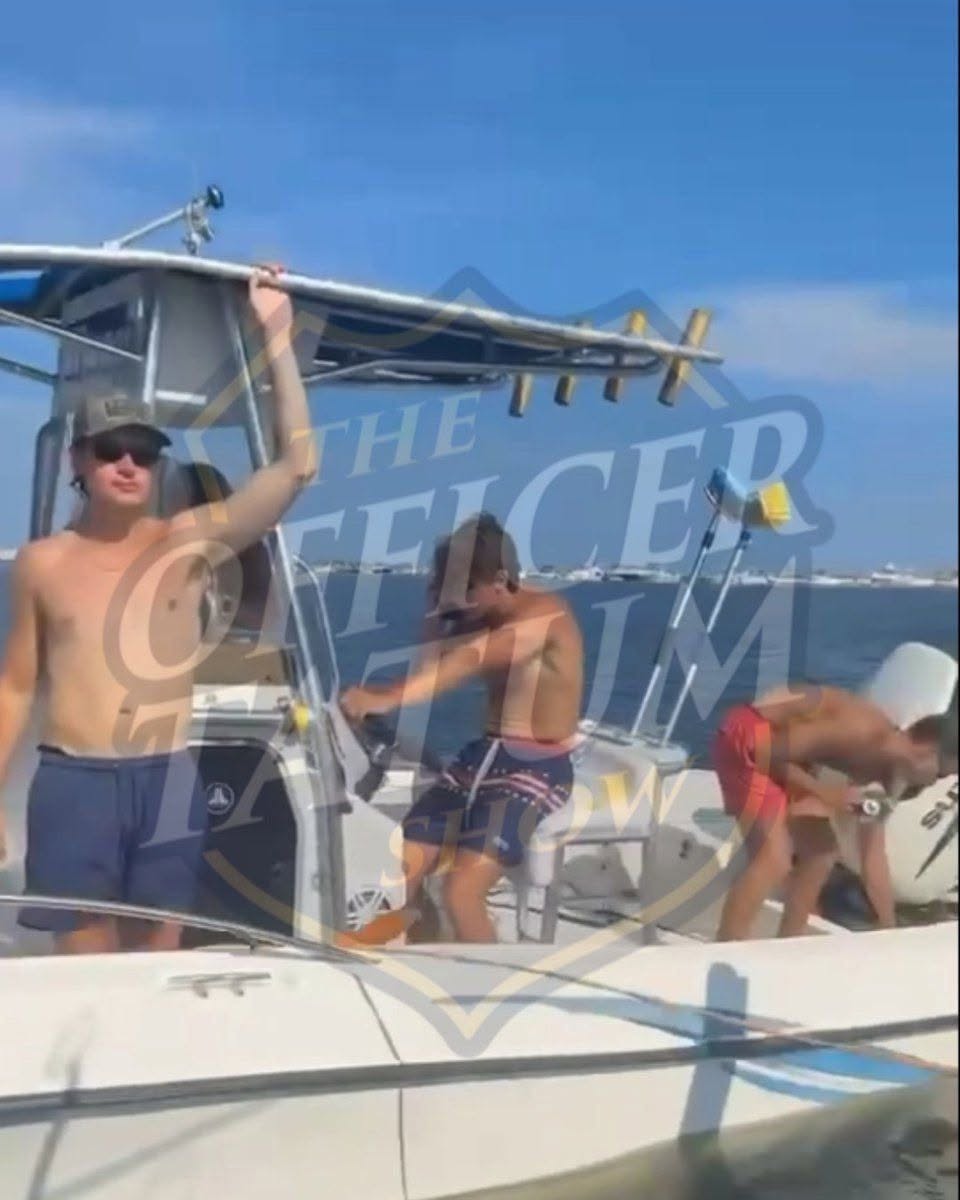
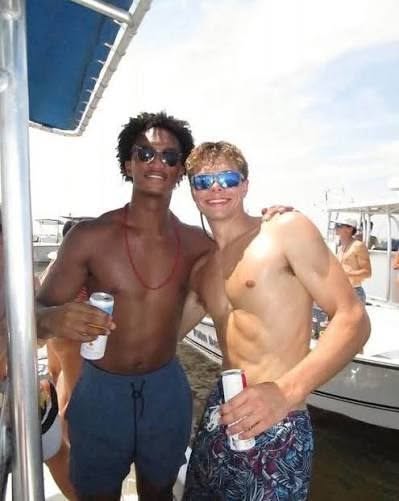
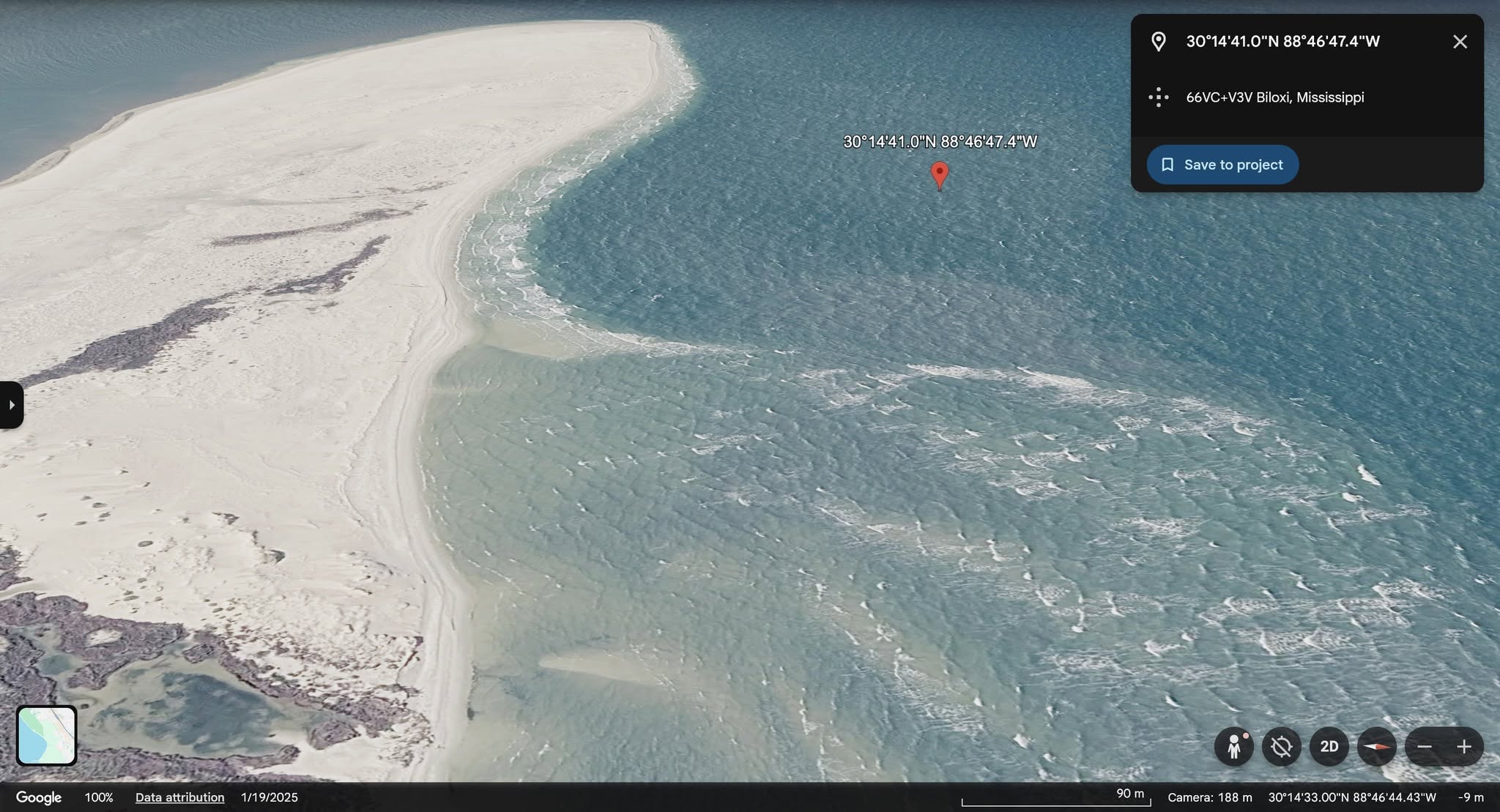
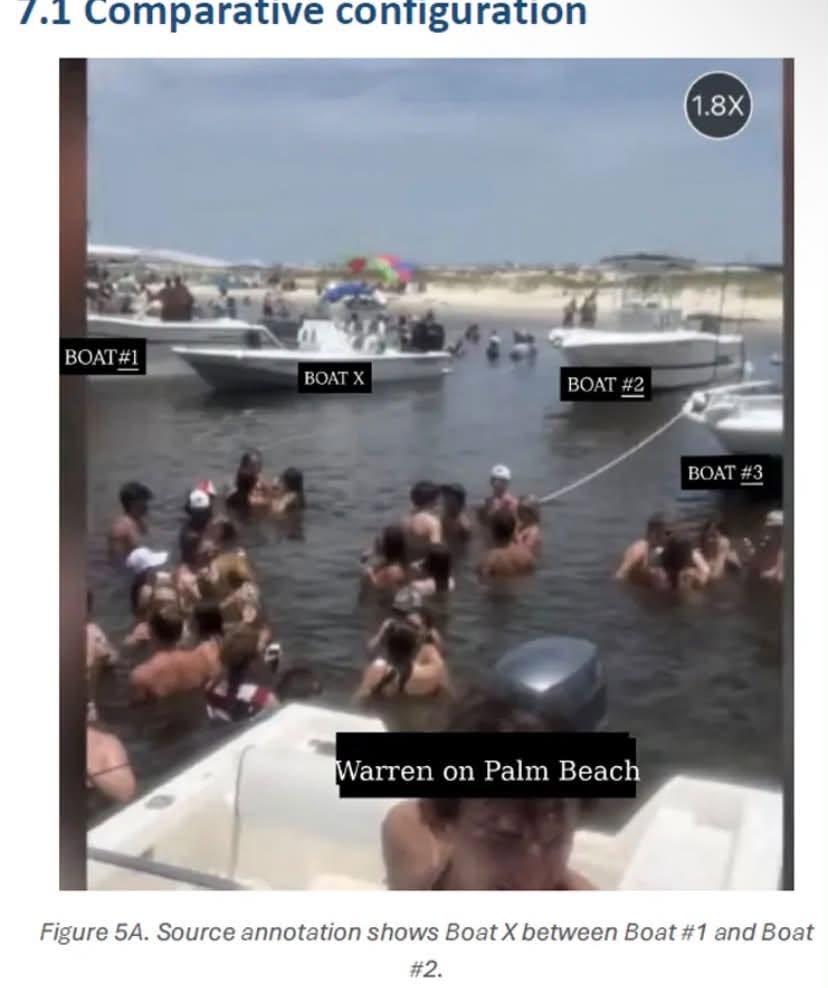
Exhibit A3 identity limit. The report catalogues the comparative image as Exhibit A3, filename 31656.jpg, and describes “Warren on Palm Beach” as a source annotation. Its wording “moderate for source identification only” gives weight to the fact that a source supplied the label; it does not mean the photograph independently identifies Warren. No complete authenticated occupant roster, named annotator, recognition statement, original unannotated file, submission date, or chain-of-custody record is disclosed. The correct public description is: “An unidentified source annotated the person as Warren Hudson, but that identification remains unverified.”
The report is dated July 31, 2026. That date does not establish when A3 or its label was submitted. A July 28 metadata reference applies to five MP4 files, not to 31656.jpg. Warren’s Officer Tatum interview was public by July 22, so the missing annotation date is necessary to test whether the identification was independent or may have been influenced by later public reporting. This uncertainty supports a possible sincere mistake or inference; it is not evidence that the source knowingly lied.
Open the dedicated United Cajun Navy report evidence review.
What the combined record now supports
- The UCN report’s configuration material identifies the Triton within a shallow-water, nearshore gathering with multiple boats and at least one camera viewpoint from within or immediately beside the group.
- The Sea Tow call later gives the distressed Triton’s current offshore coordinate at a displayed 4:48 PM. The nearshore and offshore placements support intervening vessel movement by that time.
- The Sea Tow coordinate and later-recorded Garmin reference are approximately 916 feet (279 meters, 0.151 nautical mile) apart; the Sea Tow point is generally northwest of the Garmin reference.
- If both coordinates are accurately transcribed and refer to MI4088BU, ordinary single-point GPS scatter is not an adequate explanation for their full separation. Garmin says consumer chartplotter GPS accuracy is generally around 3 meters, while noting that larger errors can occur.
- MDMR’s 4:31 PM movement marker can explain the later offshore placement. The present public record does not prove a separate movement before 4:31 PM.
What remains unproved
- The exact capture minute of either supplied boat image, absent the native files or complete timestamp record.
- The independent pixel-level basis for every report annotation identifying the Triton, Palm Beach, passengers, or camera platform.
- Whether any smaller repositioning occurred before 4:31 PM; the released summary does not expose the raw point table needed to test that question.
- That the vessel was already under tow when the Sea Tow coordinate was spoken.
- That MDMR lied, intentionally omitted movement, or that GPS data was deleted. The current public record does not establish intent, deletion, or misconduct.
- Any conclusion about whether Nolan could retrieve his phone based solely on these images.
What MDMR actually published
MDMR says MI4088BU’s ADM file contained waypoints, tracks, and routes; that the ADM was converted to GPX; and that the GPX was placed into Google Earth to create PowerPoint slides showing dates, times, and vessel routes. Its released summary describes 11:15 AM–4:30 PM as “GPS dropping points consistent with a stationary position and GPS on,” then begins sustained northbound movement at 4:31 PM. Because the newly located displayed call record places Sea Tow at 4:48 PM, the later call coordinate does not contradict that published sequence. The raw point table is still needed to test whether smaller movements occurred within the summarized interval.
Current analytical conclusion
The reliable conclusion is narrower: the Triton appears in a nearshore configuration and is later associated with the offshore coordinate spoken during a call displayed at 4:48 PM. MDMR’s 4:31 PM movement marker falls between those records and can account for the change. Earlier versions of this archive treated the Sea Tow call as occurring before 4:31 PM and therefore overstated the evidence for pre-4:31 repositioning; that inference is withdrawn. Native MI4088BU ADM/GPX points and original call metadata remain necessary for a minute-by-minute reconstruction.
Sources: preserved 22-page working analytical report, MDMR report · page 5, GPS extraction summary · page 1, Sea Tow coordinate transcript, and Garmin chartplotter accuracy guidance.
Media-source preservation · approximately 1:55 PM on July 4, 2026
Panorama preserves the nearshore tied-boat scene
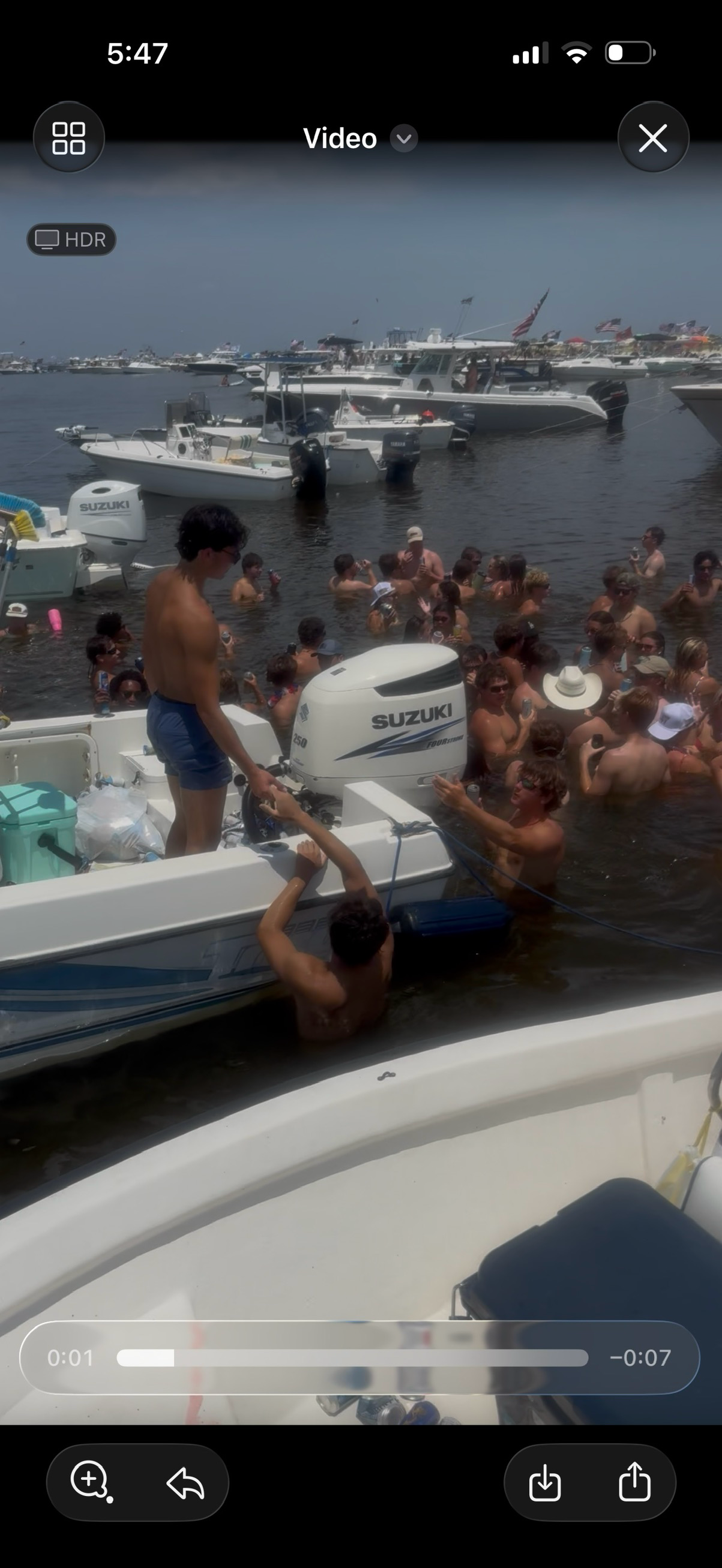
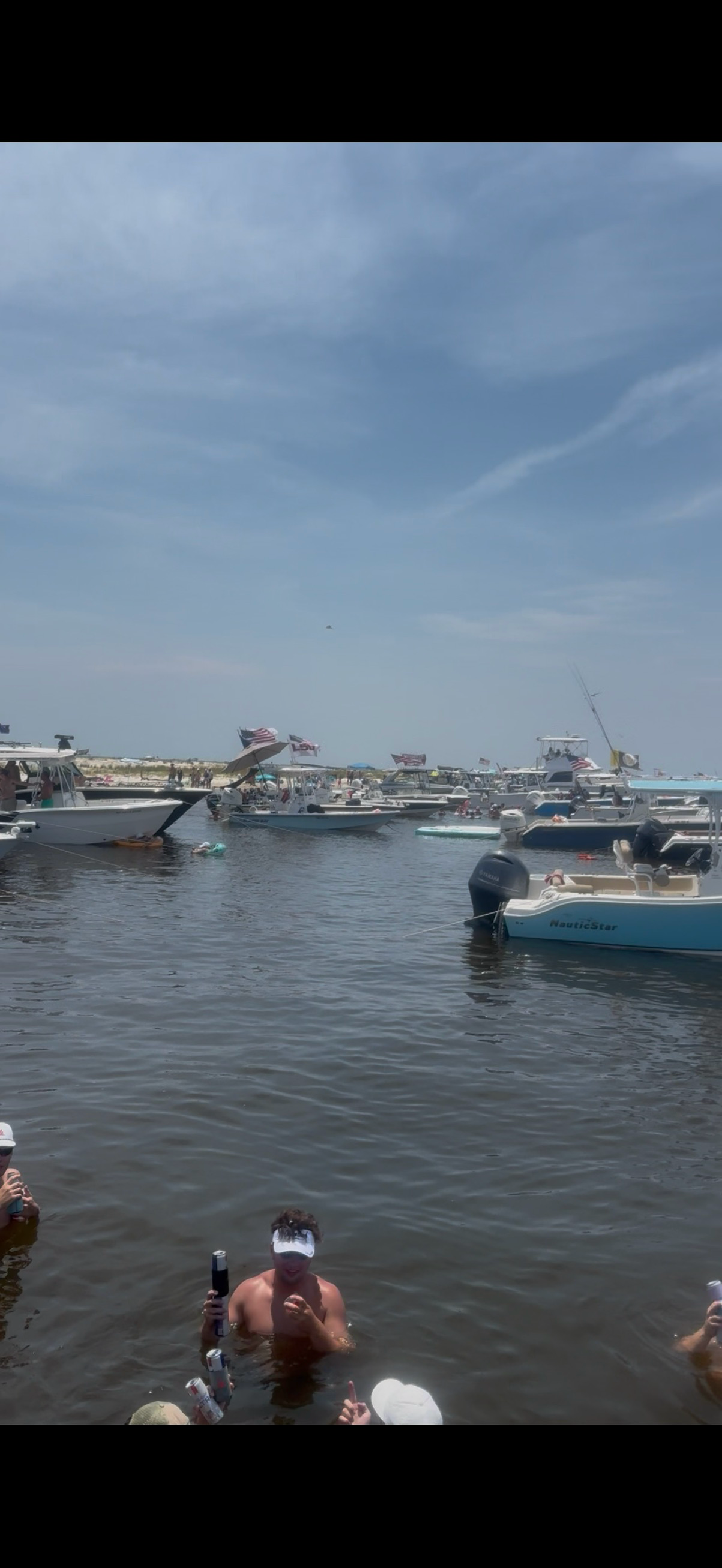
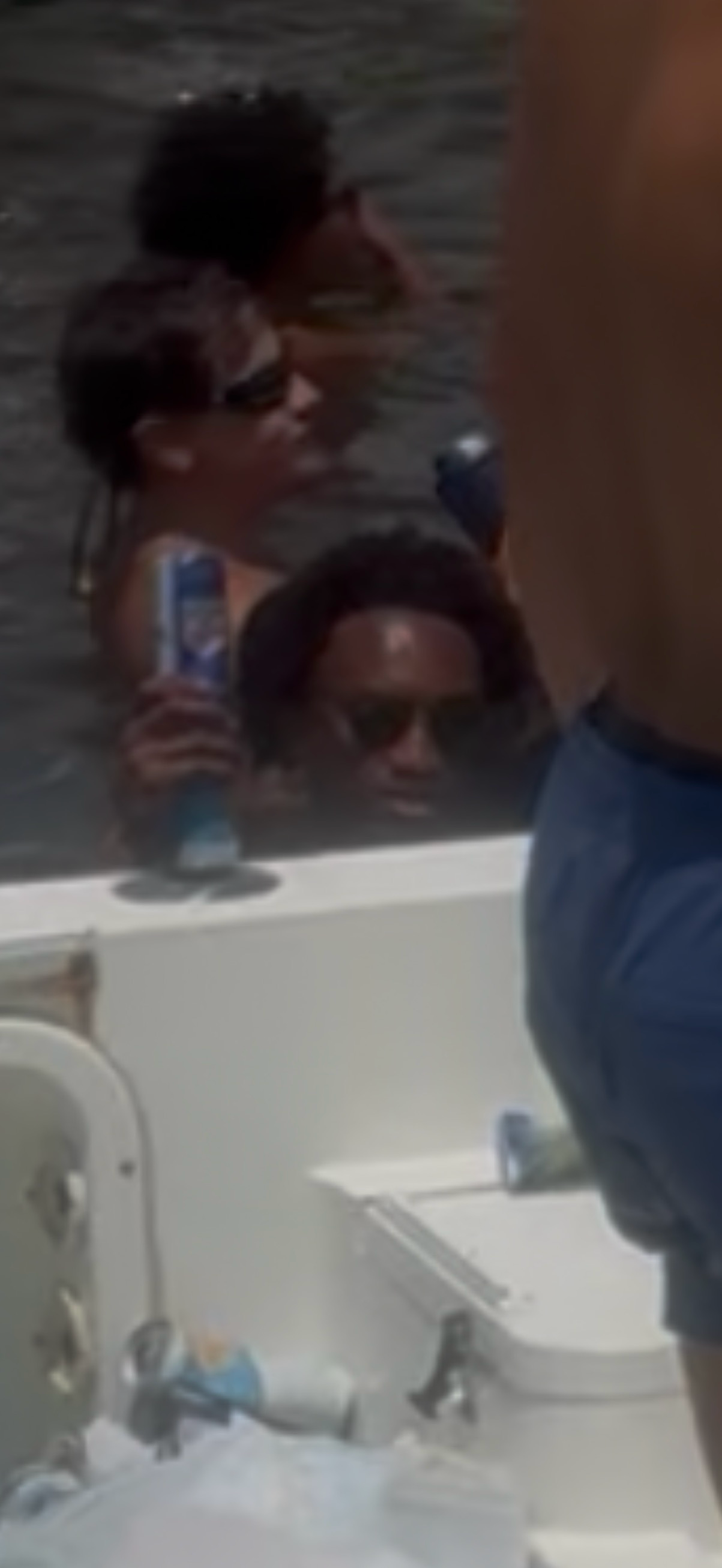
The official Nancy Grace YouTube episode Nolan Wells Family Hits Social Media Giants, Subpoenas Nolan’s Accounts contains a clean, continuous view of the July 4 Horn Island shoreline gathering from approximately 16:18.5 through 16:48.9. A separate August 21, 2026 Taylor & Cox / Taylor Dykema letter publishes higher-resolution stills from the same scene and states that the page 6 images show Nolan amidst the group at approximately 1:55 PM.
What the combined record supports
- The footage and higher-resolution letter exhibits directly record a crowded, shallow-water gathering close to the Horn Island shoreline.
- The August 21 counsel letter states that its page 6 images show Nolan amidst the group at approximately 1:55 PM.
- Warren’s public account identifies the group’s tied-boat order as Tideline, Palm Beach, and Triton.
- The UCN comparative material separately identifies the Triton within the nearshore configuration.
- MI4088BU’s official GPS arrival at 11:14 AM, the counsel-attributed 1:55 PM scene, MDMR’s 4:31 PM movement marker, and the distressed Triton’s 4:48 PM call coordinate support a shoreline-to-offshore sequence.
What the footage alone does not establish
- A native capture timestamp, photographer, original post, or complete chain of custody. The letter does not explain the record supporting its approximately 1:55 PM attribution.
- Readable registration numbers independently identifying every visible boat.
- That the named boats stayed continuously fixed in one shoreline position from 11:14 AM until approximately 4:00 PM.
- The exact minute the Triton left the shoreline cluster or reached the coordinate spoken during the Sea Tow call.
Claim boundary
The conclusion comes from combining distinct sources: official GPS fixes the 11:14 AM arrival and 4:31 PM movement; the August 21 counsel letter places its page 6 scene at approximately 1:55 PM; the panorama and UCN material preserve the nearshore configuration; Warren supplies the named three-boat order; and the released call supplies a later current coordinate at a displayed 4:48 PM. The 1:55 PM placement is materially more specific than the earlier unresolved range, but it remains a counsel-attributed approximate time until native metadata or the underlying timestamp record is produced.
Sources: preserved August 21 counsel letter · page 6 (original Drive source), Nancy Grace official upload · 16:18, Warren interview · tied-boat configuration, UCN comparative-configuration review, GPS extraction summary · arrival, and released Sea Tow coordinate.
Claim-level reconciliation · reviewed August 28, 2026
Facebook research audit
A review of 154 case-related posts and more than 1,000 case-related comments written by Brandon Henry was used to locate records, compare evolving claims, and identify corrections. The Facebook material is provenance for the research process; the underlying record, interview, or media remains the evidentiary basis.
Incorporated or strengthened
- The displayed 4:48 PM Sea Tow call time and the new 4:31–4:48 PM evidence gap.
- The official 5:44 PM dock, 5:52 PM Fort Bayou departure, and 6:06 PM dock-return sequence.
- The displayed 11:07 PM–2:57 AM family, Coast Guard, message, and 911 contact anchors.
- The incomplete listener chain behind the alleged refusal and alternate-ride account.
- A qualified, secondhand Katie-related goodbye account and attorney-described pre-family-call contact.
Superseded or excluded
- The former conclusion that nearshore imagery and the Sea Tow coordinate proved movement before 4:31 PM.
- Unsupported post-4:31 PM Nolan sightings and unrecoverable exact-time claims.
- Criminal accusations, behavior or enhanced-audio interpretations, and probability estimates.
- Precise residential addresses, broad relationship graphs, and guilt by association.
- An August 28 guest-identification claim that did not match the reviewed Nancy Grace source.
Open the full research audit · Download the machine-readable findings
Project philosophy
No mixing of evidence types
The site is not intended to prove any theory. Each factual claim receives one evidence classification and a confidence level.
Source hierarchy
Current best sources
- Official MDMR RMS report — highest-confidence obtained source; contains GPS chronology, officer narratives, boat registrations, CAD logs, and search coordinates. Open report.
- PLUNDER July 2026 source archive — supplied the redacted GPS extraction summary, a released USCG particle-drift graphic, drone search grid, MDMR-to-USCG SAR email, Strickland supplement, permission-to-search forms, additional MDMR files, dispatch recordings, and court records. Open source index.
- Official companions still missing or incomplete — native Garmin ADM / GPX data, native particle-drift model inputs, native drone flight records and imagery, complete USCG response package, original Sea Tow machine export and authenticated metadata, and safe public redactions of the permission-to-search records.
- Named public interviews — useful for firsthand accounts, but recollection and timestamp precision must remain separate from objective records.
- News and media archives — ABC, People, Rolling Stone, WLOX, CBS, and TMZ, evaluated claim by claim.
- Subtxt — useful as an interview and media index, but not authoritative and known to contain vessel and reconstructed-time errors.
Verified
Official GPS timeline · MI4088BU
- Departs El Camino Real Road.
- Arrives at Horn Island.
- MDMR characterizes the GPS point pattern as “consistent with a stationary position” while the GPS remains on. The displayed 4:48 PM Sea Tow time no longer places the later call coordinate inside this interval; the released summary does not provide the raw points needed to audit smaller movements.
- Begins northbound movement at approximately 0.06–4.2 knots.
- A reproduced phone-log exhibit displays the Sea Tow call while the official slow-movement segment is underway.
- Approximately 2.75 miles of slow movement.
- Resumes normal operation at approximately 30–35 knots.
- Reaches El Camino Real Road.
- Departs east into Fort Bayou and returns to the dock.
The 4:31–5:24 PM segment is verified sustained movement. Its interpretation as the private-assistance or tow phase is a separate, strongly supported reconstruction based on the 4:48 PM distress call, its cancellation after private help was arranged, and the slow speed range. GPS alone does not prove a tow line, identify the assisting vessel, or establish the exact tow-attachment minute.
Critical limitation
What the GPS does not tell us
- Who was aboard.
- Where Nolan was.
- Who entered or exited the water.
- Whether passengers transferred between boats.
Vessel distinction
Boats
Triton · MI4088BU
Contains waypoints, routes, and tracks. It is the vessel tied to the official GPS timeline above.
Tideline · MI1295CB
The obtained material contains waypoints but no tracks. A waypoint must not be rendered as a continuous route.
Released audio
Sea Tow
Established by the public call
- Boat taking on water.
- Bilge-pump failure.
- Approximately seven aboard.
- Caller says everyone is okay and the vessel is not aground.
- Caller gives 30°14.684′ N, 88°46.790′ W as the current coordinate.
- Private assistance obtained; Sea Tow canceled.
Still unknown
- Original Sea Tow machine metadata and a carrier-certified call record.
- Original coordinate precision.
- Exact tow-attachment point and configuration.
- Full participant list for the later tow.
Displayed call time: 4:48 PM. This comes from a phone-log exhibit reproduced in an August 21 counsel letter. It supersedes this archive’s earlier reliance on a 3:48 publication label and “around 4 PM” reporting, while original Sea Tow metadata remains the preferred authentication source.
The spoken coordinate is approximately 916 feet from MDMR’s later-recorded Garmin anchor reference. That supports the same general offshore assistance area; it does not make the two coordinates identical. Read the full comparison.
Read the bundled call transcript.
August 29 statement about a claimed second recording
A complete 4:38 public upload preserves Josh Gill saying he personally watched a separate video recorded during the Sea Tow call. He says the recording contains audible background conversation and identifies Tyler Cox as possessing it. He adds that he assumes law enforcement also has it.
What the upload supports
- Gill publicly claims firsthand viewing of a separate video recorded during the call.
- He attributes the video to activity involving Bart’s boat and says background chatter is audible.
- He expressly names Tyler Cox as possessing it.
- The claimed recording is a concrete preservation and authentication lead.
What it does not support
- Gill never says Nolan’s name is audible in this upload.
- Gill never says Nolan’s voice is audible or has been identified.
- He does not identify the recorder, device, native timestamp, metadata, transfer history, or chain of custody.
- Law-enforcement possession is presented as Gill’s belief, not confirmed personal knowledge of receipt.
Assessment: if the native second recording exists, a forensic comparison could test whether shared speech, noises, and sequence align with the original Sea Tow recording. That comparison requires the native video, the original Sea Tow file, preserved clocks and metadata, and a documented chain of custody. The August 29 discussion is evidence that Gill made the claim; it is not the claimed second recording and does not authenticate its contents.
Gill also presents an electronics-and-water explanation and expressly labels it a hypothesis. His reference to 12 or 13 people is not adopted as a passenger count here because the released call reports approximately seven aboard and the source basis for Gill’s larger number is unresolved.
Sources: complete preserved upload, time-coded content log, and claim table; original YouTube publication; and released Sea Tow audio record.
Public accounts
Witness notes
Tracestin
Already at Horn Island; says Nolan called around 11:00 AM; describes spending much of the day with the group, the altercation, being forced aboard, and leaving. Missing: authenticated timing, Nolan’s exact last words, and who personally heard any decision to remain.
Jayvon
Later says he was socializing with Nolan, places an altercation around 3:40–4:00 PM, and says he left for approximately 15–20 minutes to check on a friend before returning to find Nolan’s boat and group gone. This supplies a firsthand observation gap and a witness-estimated sequence, not an authenticated clock, complete vessel identification, or proof of Nolan’s location. Source: published interview, 3:16–3:53.
Warren
Publicly says friends tried to convince Nolan to leave and that Nolan declined. Missing: an authenticated exact quote, time, complete list of people who heard it, and a specific return boat.
Katie
Public reporting says she believed Nolan was returning on his original boat and did not think he was remaining for her. Missing: the exact conversation, time, and final words.
Wyatt
Major public gap: last interaction, boat assignment details, and whether Nolan approached MI4088BU before departure.
Bart
Major public gap: last interaction, exact timeline, and occupants.
Anna C. Moore · original uploader
The supplied Facebook profile confirms Moore’s identity. Her direct July 7 clarification says she never saw Nolan and never said the recorded argument involved him; she says the footage was sent to authorities and Nolan’s mother before public posting. Missing: the original file and metadata, additional footage, exact vessel position, and boat occupants.
Verified document · medical interpretations attributed to author · High confidence for contents
Final independent autopsy · September 14, 2026
The complete 10-page report by Roger A. Mitchell, Jr. was obtained September 22 from the DocumentCloud PDF embedded by Sun Herald, which reports a September 21 public release. Cause and manner remain undetermined. The report identifies head contusions and probable additional back bruises, documents later examination of retained neck structures without acute injury, and explains why decomposition-fluid ethanol cannot reliably establish blood alcohol at death. Injury mechanism, exact timing, contribution to death, water-entry circumstances, and date of death remain unresolved.
Report pages 1–4 and 6–8 support those findings. Page 6 reports no water identified in the airway and no gastric contents, including water, in the stomach; this is not a separate finding that the lungs contained no water or a definitive exclusion of drowning. Page 5 describes photographs showing Nolan face down on the shoreline with his head in the sand and face down in the water, without resolving the initial discovery position, sequence, or who may have moved him; the site owner supplied a map clarification identifying the intended coordinate as 30.242800, -88.778600, rather than the printed 80.77860°W longitude. This attributed clarification does not establish the initial discovery position or the photograph sequence; an original agency scene record confirming the coordinate remains needed. The report’s account of the state autopsy is not a substitute for obtaining the original state and laboratory records. Page-linked review, source manifest, and original PDF.
Analytical safeguard · not an allegation
Narrative formation and the risk of lock-in
The public record currently gives official characterizations more reach and apparent authority than the underlying evidence available for independent inspection. That imbalance can lock a developing case into a narrative before its key propositions have been proved.
Authority does not create independent corroboration.
When a witness claim is repeated by a relative, summarized by law enforcement, and then repeated by news organizations, it may still be one source chain—not several independent confirmations. The archive must count origins, not repetitions.
Two propositions that must remain classified as unproved
“Nolan chose to stay”
This remains a material witness claim. The public record has not identified the specific alternate boat operator, authenticated Nolan’s exact words, or established who independently heard an agreed return arrangement.
“Nolan drowned”
The final independent report dated September 14 retains undetermined cause and manner and reports the same state classification. The grand jury returned a No True Bill and said neither pathologist ruled out accidental drowning. Mitchell identifies unexplained injuries and cautions against equating decomposition-fluid ethanol with blood alcohol at death. The full state autopsy and laboratory records are not included in the obtained independent report. Read the final report and its limits.
Public narrative-formation ledger
- An early MDMR entry records JCSO’s belief that Nolan had stayed with an unknown woman and probably returned on another vessel without his phone. This shows the working assumption present early; it does not verify that the ride existed. The entry became broadly visible only with the later records release.
- The public record began pairing a preliminary no-foul-play assessment with the friends’ claim that Nolan chose to remain. WLOX also reported the family’s contrary account that Katie expected Nolan to return to his original boat.
- A WLOX package combined the sheriff’s “active” and “ongoing” description with prerecorded comments from Tracestin urging the public to wait for facts. The editorial sequence reinforces an official frame, but it is not evidence that the sheriff and Tracestin coordinated the broadcast.
- ABC published Tracestin’s identification of the yelling voice as his and his denial that the viral recording involved discussion of Nolan’s phone. This corrected one public interpretation of the clip.
- The preliminary independent autopsy was reported as undetermined, limiting any claim that accidental drowning had already been medically established.
- The MDMR release added contemporaneous search, GPS, vessel, and Sea Tow records that allowed several earlier public descriptions to be tested against documents.
- The final independent report is dated September 14, released September 21 according to Sun Herald, and archived here September 22. It retains undetermined cause and manner, identifies unexplained injuries, documents a later neck examination, and limits interpretation of decomposition-fluid ethanol. Final report and page-linked review.
Two parallel records
File A · Nolan’s death
Verified movements, physical condition, conversations, transportation possibilities, recovery location, medical evidence, searches, and the unresolved interval after his last independently supported sighting.
File B · Narrative formation
Who first introduced each material claim; when it was first given to investigators and first made public; whether later speakers had independent knowledge; when contradictions emerged; and whether the official framing changed.
Hypothesis · presently unproved
How a possible cover-up must be tested
Current assessment
Premature narrative capture, confirmation bias, or excessive deference to interested witnesses is a serious risk requiring independent scrutiny. Public evidence does not presently establish that Sheriff Ledbetter, Nolan’s companions, or any other person knowingly concealed a homicide. The cover-up proposition must remain a hypothesis unless evidence supplies intent, concealment or obstruction, and an improper protective purpose.
Evidence that would materially strengthen the hypothesis
- A contemporaneous witness statement contradicting “chose to stay” that officials knowingly concealed while publicly presenting the opposite as established.
- Original GPS, video, phone, audio, or medical evidence that was withheld, altered, destroyed, intentionally left untested, or publicly misrepresented.
- Evidence that officials knew there was no confirmed alternate ride but nevertheless described one as verified.
- Evidence that witnesses were permitted or encouraged to coordinate material accounts before separate formal interviews.
- Communications showing pressure to protect a person, family, agency, or public narrative.
- A public statement that its speaker privately knew was materially false.
Time, silence, secrecy, or a poor investigation alone would not prove a cover-up. They may justify suspicion and independent review; proof requires evidence of intentional concealment, obstruction, deception, or deliberate protective avoidance.
Race and institutional trust
Mississippi’s documented history makes demands for outside verification rational, but history cannot prove misconduct by a present-day actor. The Mississippi Department of Archives and History records describe the State Sovereignty Commission as a state agency with investigative powers created in response to desegregation; its records were sealed and later opened after prolonged litigation. The relevant lesson is methodological: an official explanation and official secrecy cannot authenticate themselves. Historical context raises the need for transparent safeguards, not the evidentiary status of a current allegation.
Preservation and accountability
Anti-lock-in protocol
The way to prevent a weak narrative from becoming permanent is to preserve a dated, source-level record now—before memories converge, files disappear, web pages change, or later summaries replace original words.
- Record exact words. Preserve the original quote, recording, transcript location, speaker, and context—not only a reporter’s paraphrase.
- Separate three dates. Record when the event allegedly occurred, when the account was first given to investigators, and when it first entered the public record.
- Identify the source chain. Mark personal observation, secondhand repetition, official summary, media interpretation, or documentary record. Repetitions from one origin do not become independent corroboration.
- Preserve originals. Retain native media, metadata, hashes, complete audio channels, GPS exports, phone extractions, reports, and revision history. Never substitute enhanced or reposted media for the source file.
- Log investigative benchmarks. Record what was obtained, when it was obtained, who reviewed it, which tests were performed, which witnesses were interviewed separately, and why any obvious step was declined.
- Track contradictions without accusing. For each material narrative, show supporting evidence, tension or contradiction, the unresolved question, and what evidence would resolve it.
- Require periodic evidence audits. The National Institute of Justice recommends comprehensive evidence inventories, recurring audits, preservation in unresolved cases, review for new forensic methods, and periodic checks that investigative opportunities have been exhausted.
- Seek independent review. A reviewer outside the original narrative chain should be able to inspect the complete file, earliest statements, objective records, and reasons for investigative decisions.
Questions the durable record must be able to answer
- Were all relevant vessels, operators, and passengers identified?
- Were material witnesses interviewed separately, and on what dates?
- Was the supposed alternate ride independently confirmed?
- Do Tracestin’s earliest interview and later public account materially match?
- Were native GPS, phone, Sea Tow, dispatch, video, and image records preserved and forensically examined?
- Was Katie’s account obtained in full and tested against the friends’ account?
- Did an independent agency review the complete—not summarized—case file?
Controlling rule: do not organize the investigation around “How did Nolan drown after choosing to stay?” Both premises remain unproved. The neutral question is: What happened to Nolan after his last independently supported sighting, and which people or vessels had the opportunity to interact with him?
Unresolved
Major timeline gaps
- Did Nolan decide to stay, and what were his exact words?
- Who personally heard the alleged exchange?
- Can the displayed 4:48 PM Sea Tow time be authenticated from original system or carrier records?
- What is the viral video’s original metadata?
- What is Katie’s complete direct account and message record?
- What are Wyatt’s and Bart’s complete timelines?
- What were the passenger assignments?
Records priority
Documents to obtain
Obtained August 1, 2026: redacted GPS extraction summary, released USCG particle-drift graphic, drone search grid, MDMR-to-USCG SAR email, permission-to-search forms, and Strickland supplement. The PLUNDER source archive identifies the source posts and available companion records.
★★★★★ Native Garmin ADM / GPX files
★★★★★ Native USCG drift model, inputs, and report
★★★★★ Native drone flight records and imagery
★★★★★ Complete USCG SAR response package
★★★★☆ Sea Tow machine export and authenticated metadata
★★★★☆ Safely redacted permission-to-search copies
★★★★☆ Reconciled vessel-track source with private parcel material removed
Rule for the entire website
Never make a visitor wonder where a claim came from
Every statement must identify its source, evidence type, and confidence. Objective records, recollections, secondhand summaries, and analytical placements must remain visibly distinct.
Contemporaneous public-source preservation
July 2026 social posts, comments, and images
Six public Facebook threads drew photo, video, and text submissions while the search and public reconstruction were developing. Eight supplemental source sets preserve attributed message, witness-account, direct-photo, location, or screenshot evidence, including Christine Wonsley’s original July 5 public-group appeal, the July 5 Allyson Lawrence preservation of the first Katelynn Brochard statement, a July 6 Jessy Wessy post preserving the complete Brochard exchange without the later video overlay, Robbie Robertson’s direct July 5 west-end photograph and statement, Tiffani Riley’s July 10 preservation of a screenshot attributed to Danny Jones, and Stephanie Adams’s direct July 5 north-side location post. The audited Nicol.Everything thread preserves Brochard’s derivative repost and clarification capture. The review retains case-related material with its parent post, visible time, permalink where recovered, and credibility assessment; preserved images also receive a local copy and SHA-256 hash. A displayed time does not independently authenticate a sender, attached media, message delivery, police receipt, or when a described event occurred.
Review scope
The audit reviewed 566 loaded top-level blocks on Christine Wonsley’s appeal, 2,253 on the United Cajun Navy reel, 586 on Will Polston’s active-search reel, 10 on the SMCC Athletics appeal, and Anna C. Moore’s 10 exposed top-level comments plus selected replies. It separately preserved Christine Wonsley’s original July 5 public-group appeal and its attached image, the Boogie LowDown post and four attachments, the Natalya King post and five attachments, the Allyson Lawrence July 5 Brochard preservation post, the Jessy Wessy July 6 six-image post set, Robbie Robertson’s direct July 5 west-end photo post, Tiffani Riley’s July 10 Danny Jones screenshot preservation, and Stephanie Adams’s direct July 5 north-side location post; those eight supplemental posts’ full comment trees were not audited. The Nicol.Everything Katelynn Brochard repost was later switched to All comments, every visible reply set was expanded, and 62 exposed comment/reply articles were reviewed against Facebook’s displayed count of 68. Facebook sometimes displays higher totals than it exposes, so none of these reviews is represented as a forensic export. Direct July 2026 JCSO and Mississippi NAACP Facebook post permalinks were not recovered; their original comment trees were not audited.
Open the complete source ledger and preserved images · Open the machine-readable record
Christine Wonsley · original July 5 public-group appeal
In the public Facebook group Horn Island, Ship Island, Sand Island, Petit Bois Island, Cat Island, Christine Wonsley posted a missing-person appeal dated July 5, 2026. The visible post reports a 3:00 PM last-seen account on Horn Island’s west tip, north side; gives Nolan’s clothing and physical description; says the family then believed he had not left the island; and says the Jackson County Sheriff’s Department, MDMR, and Coast Guard had been contacted. The earliest exposed comment reviewed is timestamped 12:40 AM on July 5, establishing that the appeal was public by then. Facebook exposed the post date but not an exact publication time in the reviewed interface. Open Christine’s original public-group post.
What the source supports
What it does not establish
Classification: Direct family search appeal · Medium confidence for what Christine publicly reported; not independent verification of the reported event time or agency-notification sequence. Open the preserved image, source limits, and hash.
East Tip image · potentially useful media lead
At 6:00 PM on July 5, 2026, Ashton Beach Jennings responded to the family appeal with the message “East Tip. July 4” and a photograph showing boats, a personal watercraft, and people in shallow water. The image may assist vessel or witness identification at Horn Island’s east end. It does not identify Nolan, authenticate its capture time, or depict the northwest search and recovery area. Open the original comment.
Matthew Lamp passenger account · material but low-confidence lead
Three commenters preserved screenshots of one Matthew Lamp thread. Lamp wrote that one of his passengers was “pretty certain” Nolan was part of a group that was almost fighting “around 5pm,” that a blue-top Bertram left shortly afterward “pretty fast,” and that three people on Lamp’s boat said the dispute was among the group.
What is preserved
What remains unknown
Classification: Secondhand · Low confidence. Lamp is relaying unnamed passengers, not claiming a personal sighting. The three screenshots are duplicate preservation of one source chain and do not create independent corroboration. The approximate account is not used to move or override the verified 4:31 PM, 5:25 PM, or 5:44 PM MI4088BU GPS anchors.
Attributed Faith Lauren source set · July 7 at 1:08 AM reporting intent
A public Natalya King post contains five images: a portrait, a first-person statement displayed under faithlaurennx, an Instagram message screen marked July 7 at 1:08 AM, an unavailable-recipient screen, and a response defending the displayed account’s authenticity. The first-person statement alleges a dispute over Nolan’s phone, an argument continuing ashore, a physical confrontation involving multiple people, and a young woman asking them to stop. The speaker says her group left before the aftermath.
What is preserved
What remains unknown
Reporting-status distinction: the 1:08 AM message says the sender “will go to the police” and refers to action “once I submit my information.” A separate statement says the account was provided, “or” would be provided, to investigators. Those formulations establish a stated intention and leave actual submission ambiguous. They do not establish that police possessed the information at 1:08 AM. Confirming receipt requires an agency record, evidence receipt, case supplement, CAD entry, authenticated submission, or direct corroboration.
Classification: Media record / attributed firsthand lead · Low confidence. The displayed speaker presents the core account as personal observation, but identity, source ownership, underlying allegations, alleged footage, and police receipt are not independently authenticated. Open all five preserved images and the source assessment.
Attributed Katie Hudson Seymour message screenshots · reported 5:00 PM request
A public Boogie LowDown post contains four screenshots of a Messenger conversation labeled “Katie Hudson Seymour.” The post caption says Warren Hudson’s mother contacted the poster on July 5, 2026 around 11:30 PM; the screenshot interface displays “SUN AT 11:26 PM.” In the visible message, the sender says Wyatt repeatedly asked Nolan to board “at five when it was time to leave,” that Nolan wanted to stay with a girl whose boat was parked next to Wyatt’s, and that Wyatt’s boat began filling with water, broke down, and was towed. The sender also says Warren was not on that boat and later noticed Nolan was missing after the group returned to a friend’s house.
What is preserved
What remains unknown
Classification: Secondhand · Low confidence. The screenshots are material evidence of what the public post attributed to the displayed sender, but they do not independently authenticate sender identity or prove the underlying claims. The five-o’clock statement is retained as a disputed source claim and does not override the official GPS anchors. Open all four preserved images and the caption context.
Lucas Aviz · apparent 2:00–2:30 PM last-contact lead
A screenshot reposted on Will Polston’s reel preserves a comment attributed to Lucas Aviz: “Last time I spoke to him was when he said I have to leave and it was probably 2 to 2:30 … I last saw him get on a white boat with a center console before I had left.” This reads as a firsthand claim, but only the derivative screenshot is preserved; its parent post and a direct Lucas permalink were not recovered. The vessel is unidentified and is not equated with MI4088BU. Classification: Firsthand lead · Low confidence.
Stephen Ray · tentative east-end sighting
A second screenshot preserves Ray writing, “I feel like we seen him on the east end yesterday standing on one the sand dunes.” The wording is expressly tentative and provides no exact time, image of Nolan, precise position, or corroboration. Classification: Firsthand lead · Low confidence.
Anna C. Moore and Ivy Elizabeth · direct video-source corrections
In a direct July 7 post, Moore states that she never said she saw Nolan and never said the recorded argument involved him. She says a friend prompted her to review a Snapchat clip, that she sent it to authorities and Nolan’s mother, and that she posted it publicly on July 6. In a direct reply, Ivy Elizabeth says she and her husband appear on the boat, describes the yelling as occurring after a fight had been broken up, says DMR arrived shortly afterward, and reports that someone in the background only resembled Nolan. Ivy explicitly says they were not 100% certain. These sources clarify the video’s purpose and witness interpretation; they do not authenticate its reported 4:01 PM time or identify Nolan in the image.
Robbie Robertson · 7:17 PM west-end photograph and late-staying party
A direct public Facebook photo post by Robbie Robertson, published on July 5, 2026, says the attached photograph was taken at Horn Island’s west end at 7:17 PM on July 4, 2026. Robertson says his boat and three other boats were the only vessels still there at that time, that the other three left shortly afterward, and that his boat remained until 9:00 PM. He also says two people with his party walked around to the south side and back at about 7:30 PM and did not see Nolan. Open the direct Facebook photo and statement.
What the source supports
What it does not establish
Classification: Firsthand witness and direct public photo · Medium confidence. The source materially establishes reported human presence after 7:30 PM and adds a limited negative-observation route, but its event times remain photographer-reported and the post does not extend Nolan’s known timeline. Open the preserved image, source assessment, and hash.
Stephanie Adams · north-side location and 3:00–7:00 PM no-sight account
In a direct public Facebook photo post published on July 5, 2026, Stephanie Adams says she sent Nolan’s mother a message and a picture of her party’s exact location. She reports remaining there from 3:00–7:00 PM on July 4, 2026, seeing nobody come down to or pass the group, and concluding Nolan did not walk that part of Horn Island’s north side during the interval. The attached phone screenshot shows a blue marker on the island’s north side but does not display coordinates. Open the direct Facebook photo and statement.
What the source supports
What it does not establish
Classification: Named firsthand negative observation and direct public map screenshot · Medium confidence. The statement materially narrows one reported north-side route during a witness-reported interval, but it cannot be converted into Nolan’s location or island-wide absence. Open the preserved image, source assessment, and hash.
Katelynn Brochard · nearby-group account and 7:30 PM departure
A screenshot attached to a public July 6 Facebook post preserves two statements attributed to Katelynn Brochard without the later edited-video overlay. She says Nolan introduced himself to her husband, that her group was parked directly beside Nolan’s group, and that Nolan was not in sight when her group left at 7:30 PM. The same screenshot shows Briana May asking whether Nolan was with the rowdy group; Brochard’s reply distinguishes Nolan as respectful and says she knew he had been on the boat with them and was having a good time.
July 5 publication provenance: a public post by Allyson Lawrence displays the first Brochard statement with its attached scene photograph. The post’s author has a visible thread comment timestamped Sunday, July 5, 2026 at 3:28 PM, followed by additional July 5 comments. This establishes that the statement-and-photo screenshot was circulating publicly by that afternoon—before the later July 7 and July 9 preservations. It does not establish when the underlying photograph was captured, authenticate the native Brochard comment, or prove that every statement in the screenshot is accurate. Open the July 5 public preservation.
July 6 complete-exchange preservation: a public Jessy Wessy post contains six image attachments, including the complete Brochard/Briana May exchange and two photographs of Nolan with companions on or near boats. The archived complete-exchange attachment contains no video-caption overlay. This establishes that the complete exchange was publicly preserved by July 6, but it does not authenticate the original comment, establish when the boat photograph was captured, or adopt the post author’s narrative caption. Open the July 6 image-set source.
What the account supports
What it does not establish
The native parent-post permalink and native comment export have not been recovered. The July 5 Allyson Lawrence post supplies the earliest directly linked public preservation of the first statement and attached photograph; the July 6 Jessy Wessy attachment supplies a cleaner public preservation of the complete exchange. A later public Nicol.Everything Facebook repost preserves the 7:30 statement and nearby-scene images but crops the thread before Brochard’s follow-up reply. A full exposed-comment audit of that repost recovered a July 9 Callie Strong attachment showing Brochard’s fuller clarification and Strong’s statement that Brochard believed her words were being twisted. No direct video file was exposed in the comments. Derivative alleged 4:30 and 6:00 sighting material was reviewed but does not corroborate Brochard and is not added as a timeline fact. Open the preserved screenshots, audit result, links, and hashes.
Working-report comparison: Figure 6B on page 12 of the July 31 geospatial report reuses the Brochard scene photograph and applies source labels for Palm Beach, Triton, and Boat #3. Figure 10 on page 18 reproduces her 7:30 statement and calls it a potentially useful negative observation only after exact vessel position, visible area, duration, and recognition are established. Warren separately names the tied-boat order as Tideline, Palm Beach, and Triton; the report itself labels the third visible vessel only as Boat #3. The comparison strengthens the adjacent-scene component of Brochard’s account, but the report expressly treats vessel names as source annotations rather than independent registration identifications. Its PDF also does not identify an author or submitting organization.
Potential line of sight—not a witnessed event
If Brochard remained in the reconstructed adjacent position during the reported altercation and boarding discussion, she may have been positioned to see or hear some part of them. Public evidence does not establish her exact position at those minutes, viewing direction, obstructions, attention, or whether she observed either event. A direct interview should ask those questions; the timeline must not state that she saw the fight or Nolan refuse a ride unless she says so.
Classification: Firsthand witness · Medium confidence overall, with the scene-adjacency component strengthened by the repeated screenshot chain and report comparison. The 7:30 time is witness-reported, not authenticated metadata. Her separate wording that “they did leave around 5” remains unresolved as to vessel and referents and is not used as a verified movement time.
Search-period participation and narrative leads
Contemporaneous comments say Nolan’s coach and friends returned to help search. These are useful public-status records but do not identify every participant or replace official operational records. A separate detailed comment by Julie Lahue says unnamed families saw Nolan with two girls and later alone; it supplies no identities, exact time, or source basis, and its immediate-notification claim conflicts with other public accounts. It is retained as an uncorroborated narrative lead, not a timeline fact.
Relevant text-only comments
A July 6 reply by Carolina Ruby Rebel states that Nolan knew how to swim and worked as a summer lifeguard. The commenter does not identify a relationship to Nolan, employer, dates, or personal basis for the statement. It is retained as an unverified, low-confidence lead, not as established swimming ability or employment history.
A separate July 6 comment by Jerry Carroll compiles the approximately 3:00 PM last-sighting narrative, the report that Nolan was with a girl, the emerging alternate-ride misunderstanding, and the initial recovery announcement. Because the writer attributes those points to friends, Josh Gill, Sheriff Ledbetter, Christine Wonsley, and an unnamed girl rather than claiming personal observation, the comment is retained only as a public-narrative source trail. It does not independently corroborate those claims.
The remaining exposed comments were predominantly questions, prayers, search suggestions, accusations, theories, derivative reporting, recovery reposts, memes, profile lists, or repetitions. None supplied a new authenticated post-3 PM Nolan sighting or an identified-vessel movement. One altered accusation image and other unrelated submissions are expressly excluded.
Excluded interpretations
Questions, prayers, blame, unsupported theories, unrelated images, and visual guesses without authenticated media are omitted. Reposts of articles or family photo sets remain derivative sources. Comments alleging trust, blame, or accident without a stated firsthand basis are not added as facts.